
Quartz Floors
Heavy-Duty, Slip-Resistant Floors for Garages, Shops, Pool Decks & More
Why Homeowners and Businesses Choose Quartz Floors
Most concrete coatings are chosen for looks. Quartz floors are chosen for performance. The aggregate gives the surface a natural grip that paint and standard epoxy can’t match — making it the go-to choice wherever slip resistance and durability are non-negotiable.
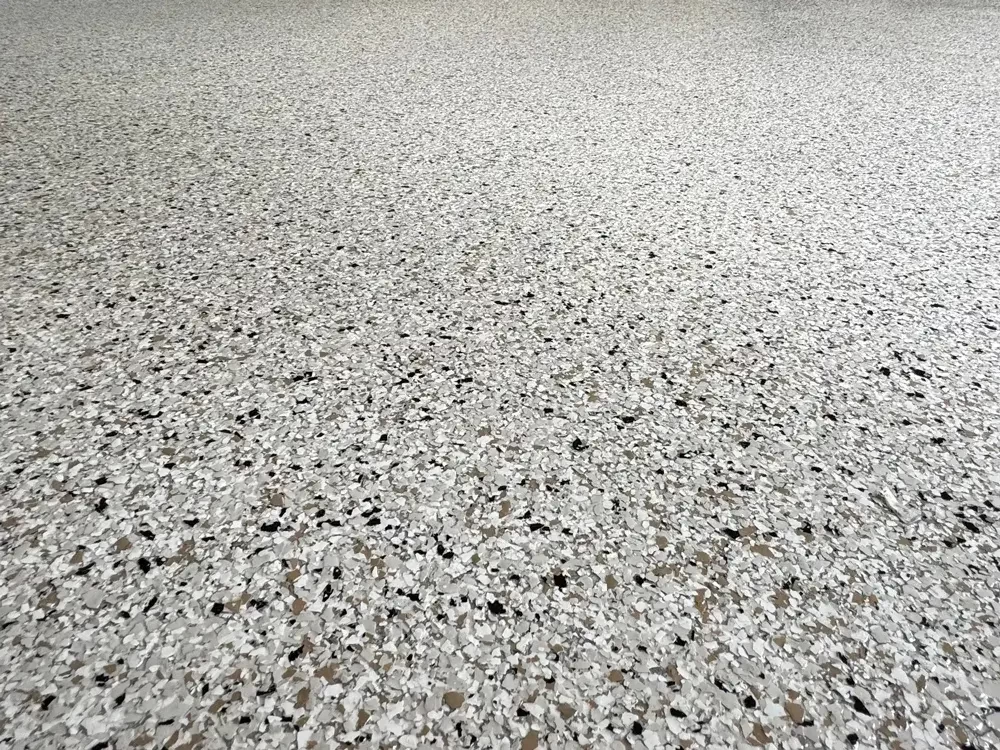
Benefits of Quartz Epoxy floors:
- Exceptional slip resistance — textured surface grips wet or dry
- Thicker than standard coatings — applied in two broadcast layers for maximum build
- Chemical resistant — stands up to oil, gas, brake fluid, salt, and pool chemicals
- UV stable — won't yellow or fade in sunlight
- Easy to clean — one mop or hose-down removes most messes
- Available in multiple quartz colors and blends
A Better Alternative to Bare Concrete
Bare concrete is porous, dusty, and slippery when wet. In high-traffic or wet environments — garages, pool decks, patios, commercial kitchens — that’s a real problem. Quartz flooring seals the surface completely, adds traction where you need it most, and does it without sacrificing appearance.
Unlike thin paint-on coatings that peel and chip within a few years, a professionally installed quartz floor is built to last 15–20+ years in residential settings and 7–15 years in commercial or high-traffic environments.
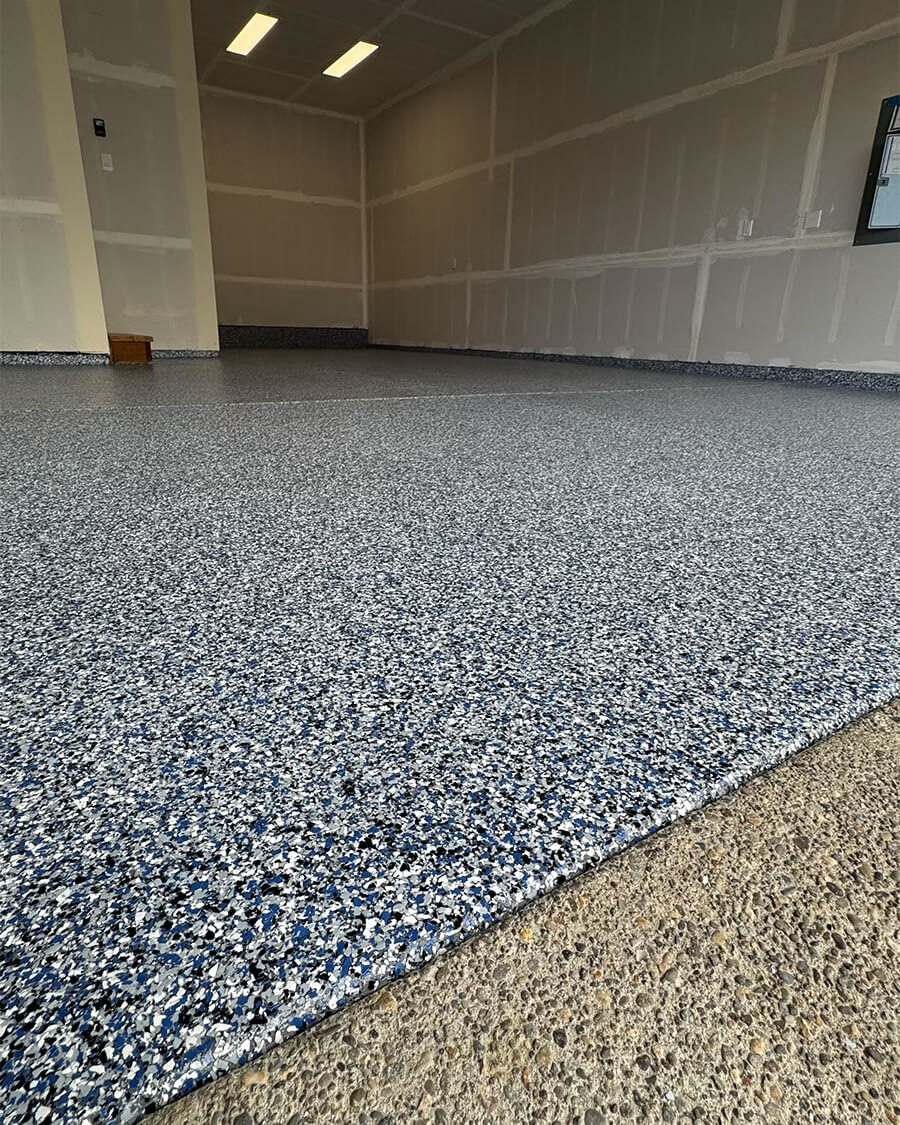
Where Quartz Floors Work Best
Common Applications Include:
Garage floors
Pool decks
Patios
Outdoor Entertaining Areas
Commercial Kitchens
Warehouses & Industrial Shops
Locker Rooms and Restrooms
Dog kennels
Basements

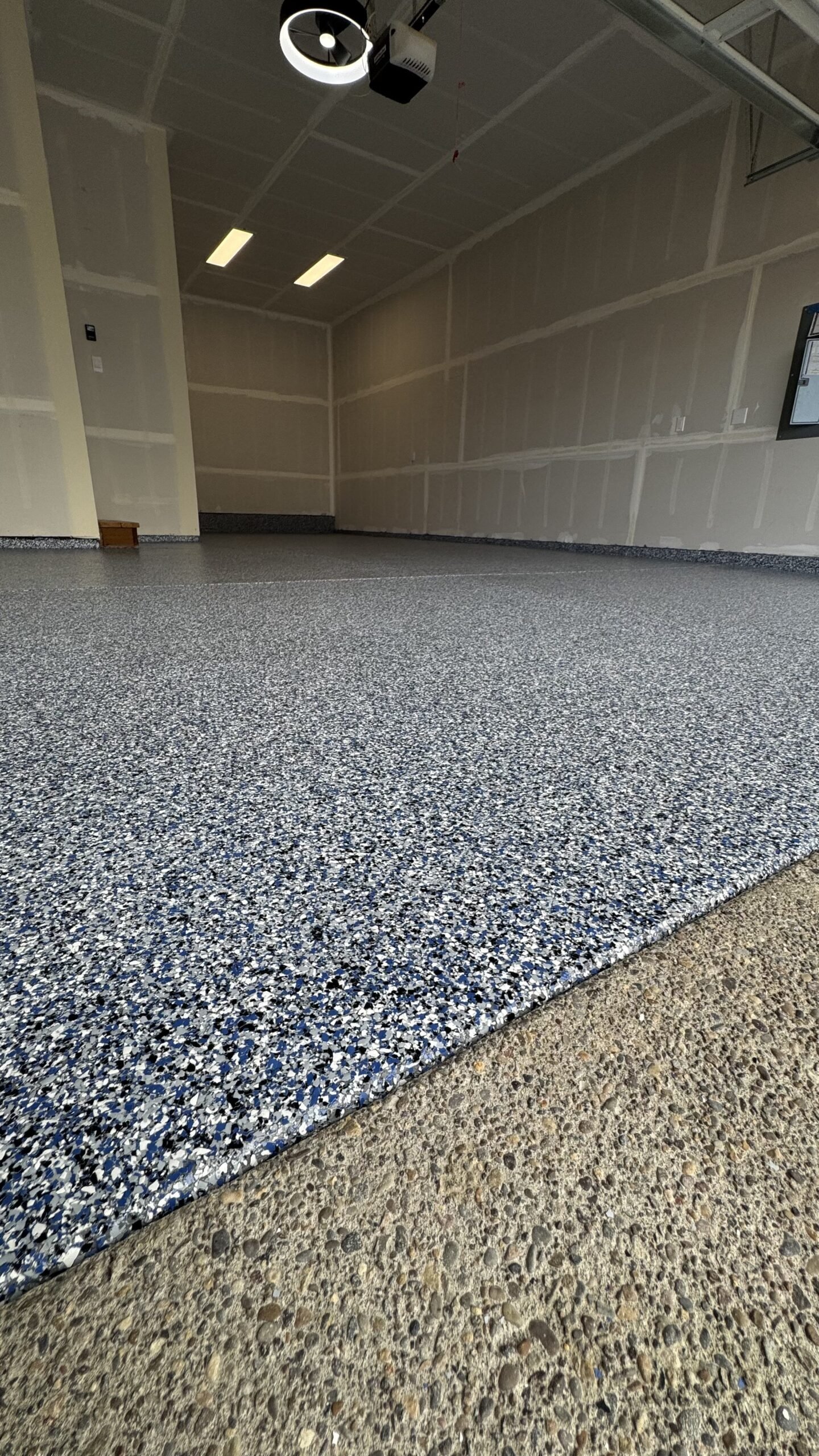

Built For Real Life
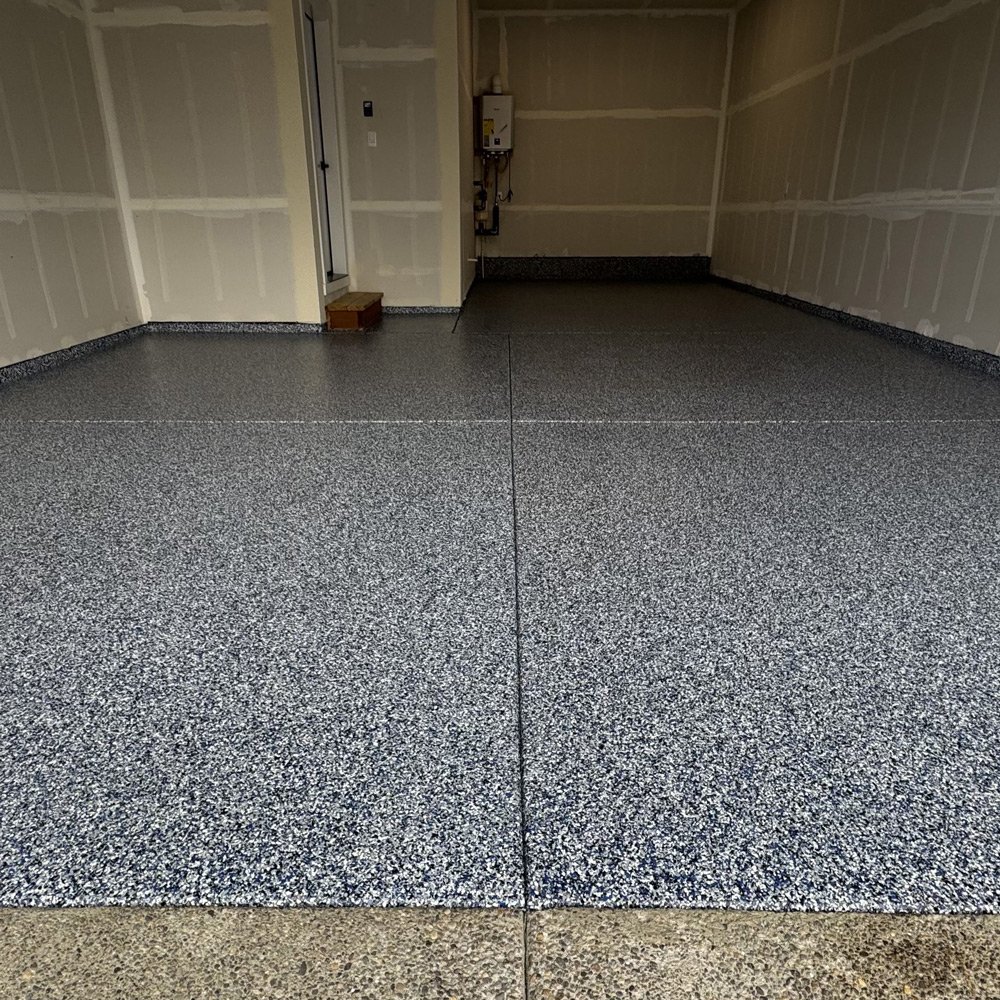
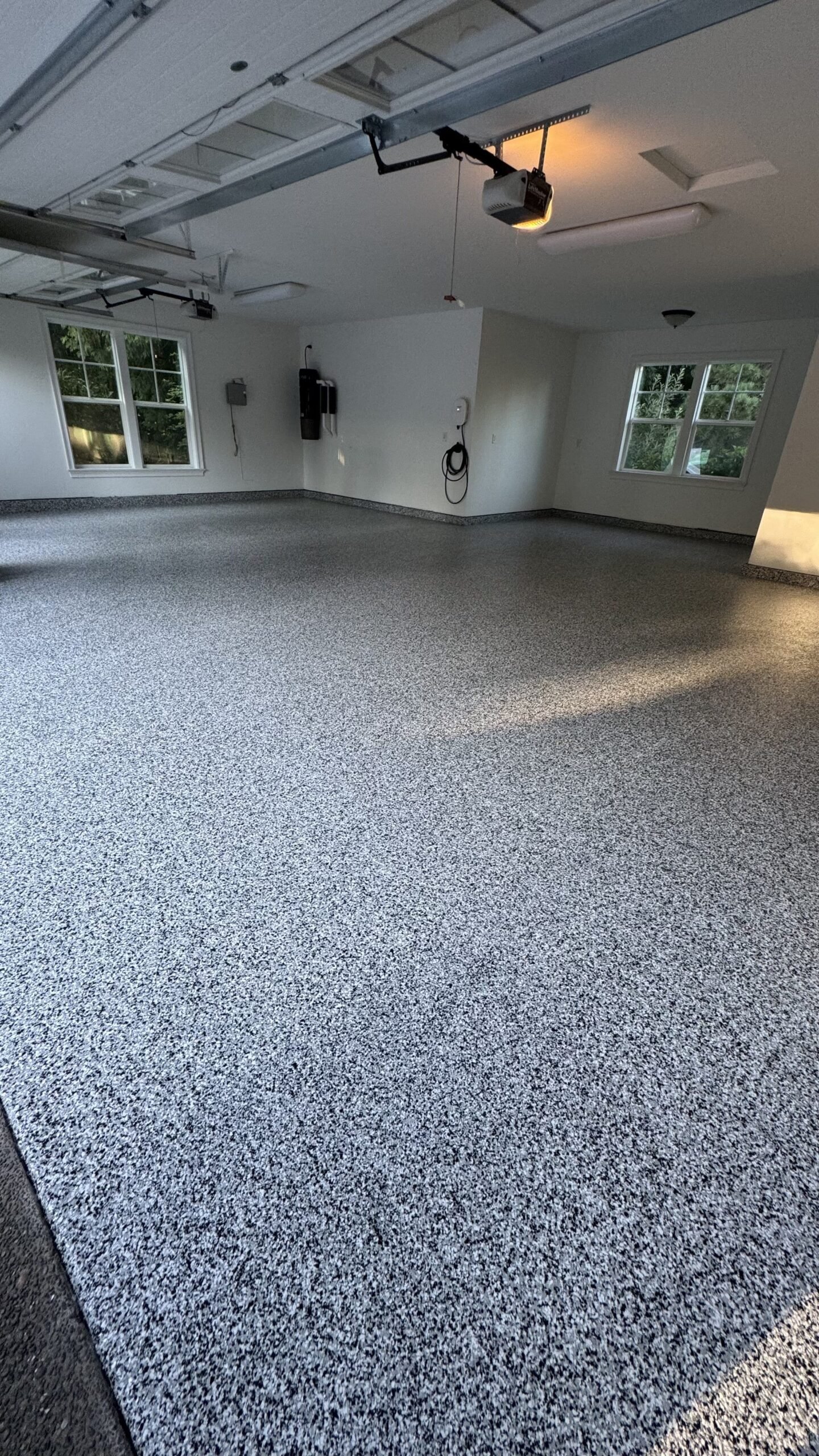
Diamond Group uses a double-broadcast technique — quartz is applied in two passes for maximum thickness and consistent texture across the entire surface. Each layer is rolled flat and locked in before the UV-stable topcoat is applied. The finished floor is dense, tight, and ready for whatever gets thrown at it.
Hot tires, standing water, heavy equipment, dropped tools — quartz handles it. And when it gets dirty, a mop or pressure washer brings it right back.
Our Installation Process
01
Evaluate
We inspect the concrete for cracks, moisture, existing coatings, and surface condition. Moisture testing is done before any coating is applied.
02
Prepare
03
Build
04
Seal
Frequently Asked Questions
A quartz floor is an epoxy coating system where colored quartz aggregate is broadcast into the wet base coat and then sealed under a protective topcoat. The quartz adds thickness, texture, and slip resistance that standard epoxy alone can’t provide.
Both use broadcast aggregate, but quartz uses hard, angular mineral particles instead of vinyl flakes. Quartz produces a denser, thicker surface with more traction — making it better suited for wet environments like pool decks, kitchens, and outdoor patios. Flake is more popular for garages where appearance is the priority.
No — that’s one of its main advantages. The textured quartz surface provides grip when wet, which is why it’s the preferred choice for pool decks, patios, and commercial kitchens where slip resistance is required.
Most residential quartz floor installs are completed in 1–2 days. Larger commercial spaces may take 2–3 days depending on square footage and surface preparation needed.
Light foot traffic is safe after 24 hours. Driving on the floor is fine after 2–3 days. Full cure takes 7 days.
With proper care, residential quartz floors last 15–20+ years. Commercial and high-traffic floors typically last 7–15 years depending on use.
Yes. In most cases we can install directly over existing concrete after proper grinding and prep. Cracked or damaged slabs are repaired during the prep phase. Severely deteriorated concrete may require additional remediation.
Yes. Quartz with a UV-stable topcoat is one of the best outdoor flooring options available. It won’t yellow in sunlight and handles freeze-thaw cycles, rain, and direct UV exposure well.
We carry a range of quartz blends in neutral tones, earth tones, and multi-color mixes. We’ll bring samples to your estimate so you can see the options in your actual space.
Yes. Every installation includes a limited lifetime warranty and a satisfaction guarantee.
Ready to Upgrade Your Concrete?
Get a free, no-pressure estimate from Portland’s top-rated epoxy flooring team. We’ll evaluate your concrete, walk you through your options, and give you a clear written quote — no guesswork.